Beginner to Pro: Hot smoking salmon made Easy in 2026
There’s a moment — somewhere between the first wisp of alder smoke curling upward and the final golden glaze setting on the fillet — when hot smoking salmon stops feeling like cooking and starts feeling like craft. After two decades of developing content for culinary brands, test kitchens, and food media, I can tell you this: few techniques reward patience and precision quite like this one.
This guide is your definitive roadmap. Whether you’re firing up a Traeger for the first time or refining a method you’ve practiced for years, what follows will elevate your results from good to genuinely exceptional.
Understanding What You’re Actually Making When Smoking Salmon
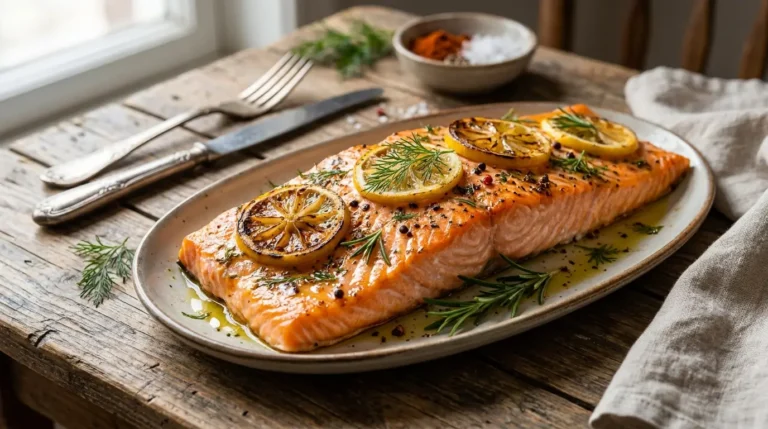
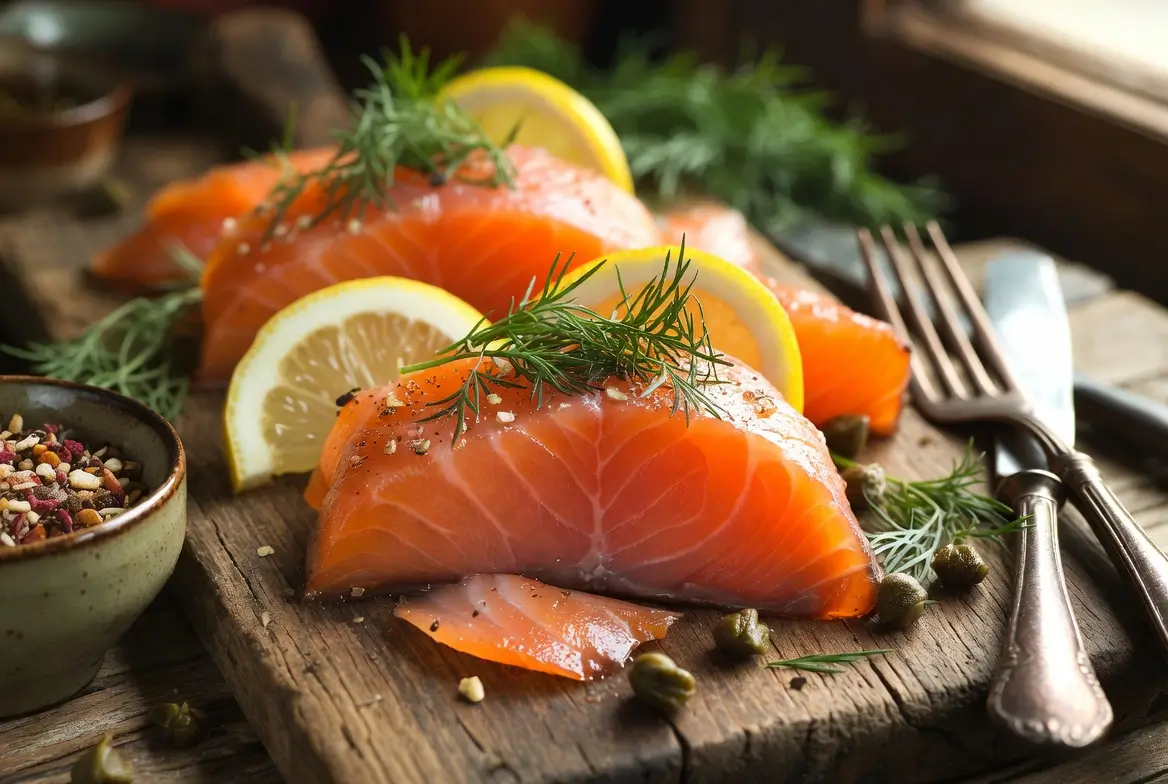
Before you touch a single fillet, get one thing straight: hot Smoking Salmon is not lox. It is not cold smoked, it is not silky and translucent, and it will not slice paper-thin for a bagel spread. What you’re producing is something far more rustic and deeply satisfying — a flaky, fully cooked fish with a rich, smoky interior and a lacquered exterior. Think delicatessen-style smoked whitefish, not charcuterie.
That distinction matters because it shapes every decision that follows: your temperature targets, your brine ratios, your finishing glaze. Hot smoked salmon is also one of the most culinarily versatile proteins you can produce. Serve it warm off the rack, fold it into rillettes or deviled eggs, toss it through pasta, or build a composed salad around it. Its depth of flavor does the heavy lifting.
Equipment and Ingredients: The Foundation of Great Results
Choosing Your Smoker
Use a Smoking Salmon with reliable, monitorable temperature control — a Traeger pellet grill or a Bradley electric smoker are ideal. The enemy of great smoked salmon is unpredictable heat. You need a chamber you can hold at 140°F for an hour, then step up precisely. Improvised setups introduce too many variables.
Wood Selection
Alder is the traditional, gold-standard choice for salmon — its mild, slightly sweet smoke complements rather than overpowers the fish. Fruitwoods like apple or cherry bring a gentle sweetness, while oak adds structure and maple introduces a subtle caramel undertone. Avoid anything resinous. Mesquite, in particular, is far too aggressive for delicate Smoking Salmon.
Salt and Sweetener
This is where many home Smoking Salmon quietly undermine their own results. Use Diamond Crystal kosher salt exclusively. Table salt contains iodine and anti-caking agents that produce metallic, off-flavors in a wet brine. For your basting sweetener, invest in birch syrup if you can source it — its complexity is remarkable. Real maple syrup and good-quality honey are excellent alternatives.
You’ll also want flat plastic containers for brining, wire racks that allow airflow on all sides, and a flat basting brush for even glaze application.
The Brine: Curing with Purpose
A basic hot Smoking Salmon brine is water, kosher salt, and brown sugar. That simplicity is intentional. The brine’s job is twofold: draw excess moisture from the flesh and begin building a foundational layer of flavor that smoke will later deepen.
Cure time is species-dependent, and this is where attention to detail separates adequate results from excellent ones:
- Thin cuts (trout, small sockeye): 4 to 6 hours
- Medium cuts (coho, silver salmon): 12 to 18 hours
- Thick cuts (king/Chinook salmon): 24 to 36 hours
The ceiling is absolute: never exceed 48 hours. Over-cured salmon becomes unpleasantly salty at its core, and no amount of technique downstream will fix that.
The Pellicle: The Step Most People Skip
If there is one phase of this process that separates serious practitioners from casual ones, it is forming the pellicle — and it is almost always skipped.
After brining, rinse your fillets lightly and place them on wire racks in a cool, breezy environment below 60°F. Over one to two hours, the surface of the fish will dry and develop a shiny, slightly tacky, lacquer-like coating. This is your pellicle.
Its function is critical: it creates a sticky surface that allows smoke particles to adhere deeply and evenly. It also seals the outermost layer of the flesh, locking internal moisture in during the smoking process. Skip this step and your smoke adhesion will be patchy, your surface may look dull, and you’ll lose moisture you worked hard to preserve through brining.
best amazon picks:
The Smoking Process: Precision Over Speed
Temperature Staging
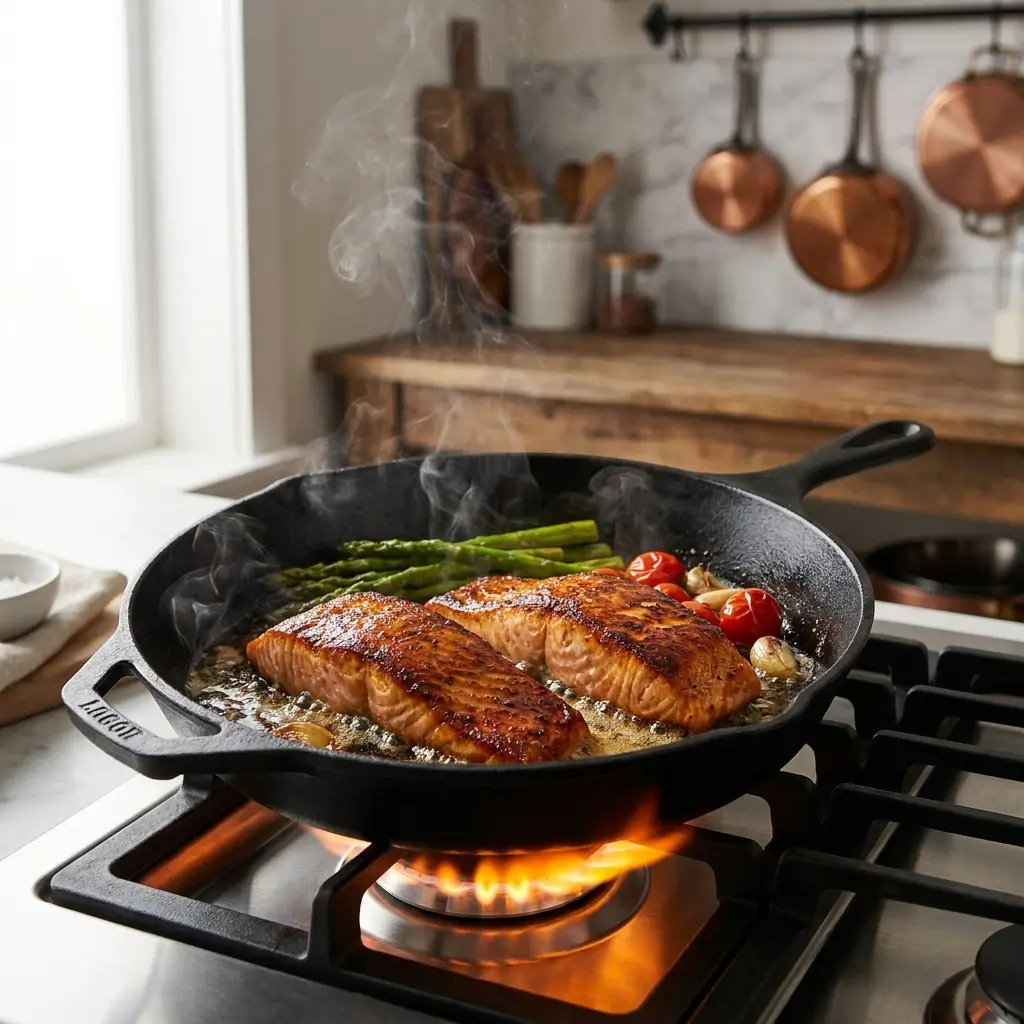
Start your smoker between 140°F and 150°F and hold it there for the first hour. This gentle opening phase allows smoke penetration to begin without contracting the muscle fibers aggressively. After the first hour, increase to 175°F and hold until you reach your internal temperature target.
Place a pan of water or ice beneath your grates. This moderates chamber temperature swings and introduces a small amount of ambient humidity that prevents the exterior from drying too rapidly.
Internal Temperature Targets
Pull your salmon when the thickest part of the fillet reads 130°F to 140°F on an instant-read thermometer. At 130°F you get a moist, slightly translucent center — deeply flavorful. At 140°F the texture is firmer and fully opaque throughout. Both are correct; it is a matter of preference.
The Glaze
Every hour, baste your fillets lightly with your chosen syrup. This serves two purposes: it builds a layered, caramelized exterior, and it helps manage any protein bleed on the surface, which leads us directly to the next point.
Troubleshooting: When Albumin Appears
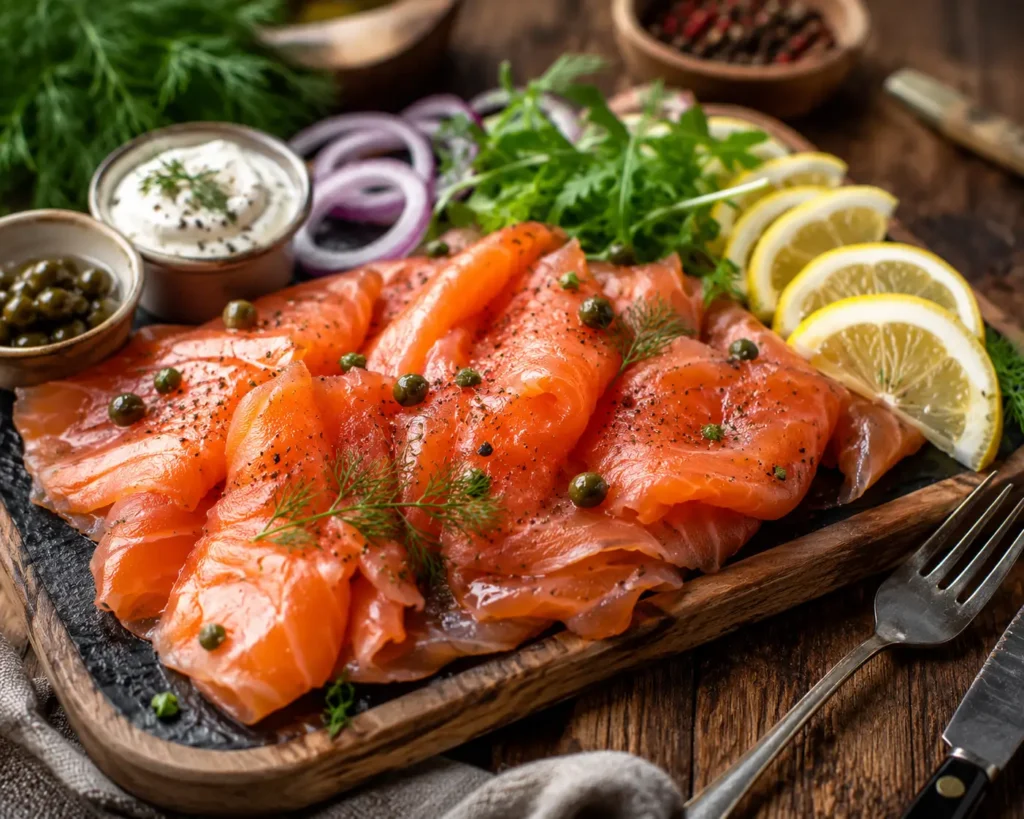
That white, cottage-cheese-like substance that sometimes appears on the surface of smoked fish is albumin — a water-soluble protein that congeals and is forced outward when muscle fibers contract too violently from rapid heat. It indicates your temperature climbed too fast.
It does not mean your salmon is ruined. Fold it into a salad dressed with a well-seasoned mayonnaise, which masks any textural dryness beautifully. Consider it a kitchen lesson with a delicious outcome.
Expert Finishing Touches
After your final basting and before the fish goes back in for its last stretch, apply a generous layer of coarse-ground black pepper across the surface. The heat blooms the pepper’s aromatics and the result is remarkable.
If you want more smoke at lower temperatures — particularly useful on warm days when ambient heat makes chamber control harder — use a smoking tube filled with pellets. It generates consistent smoke without requiring your main heat source to compensate.
Post-Smoke Care and Storage
Remove your fillets from the smoker and allow them to rest on a wire rack for a full hour before refrigerating. This resting period lets internal temperatures stabilize and the surface glaze to set properly.
Stored correctly, your smoked salmon will keep:
- Wrapped in the refrigerator: up to 10 days
- Vacuum-sealed: up to 3 weeks
- Frozen: up to 1 year
From here, the applications are wide open — Salmon Piccata, a creamy smoked salmon pasta, or a luxurious risotto built around the fish’s smoky depth. The craft you put in at the smoker pays dividends across every dish it touches.
Hot smoking salmon is not a shortcut technique. It rewards those who understand why each step exists. Master the brine, respect the pellicle, control your heat, and the results will speak entirely for themselves.
Leave a Comment & Rate this Recipe!
If you love this recipe, please consider giving it a star rating when you leave a comment. Star ratings help people discover my recipes online. Your support means a lot to me, I appreciate you.
There are no reviews yet. Be the first one to write one.