
How to Get Perfectly Crispy Roasted Vegetables
I.The End of Mushy Vegetables
If you’ve ever pulled a tray of roasted vegetables from the oven only to find them half-burnt on the edges and oddly steamed in the middle, you’re not alone. Perfect roasted vegetables seem simple — until soggy Brussels sprouts and limp carrots prove otherwise.
This recipe fixes that problem completely.
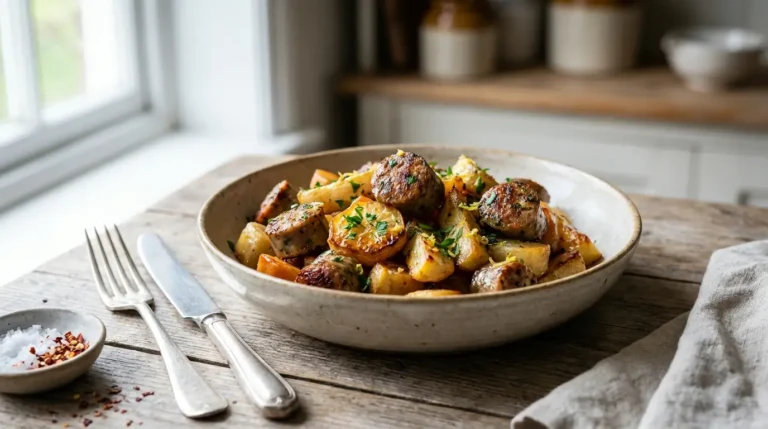
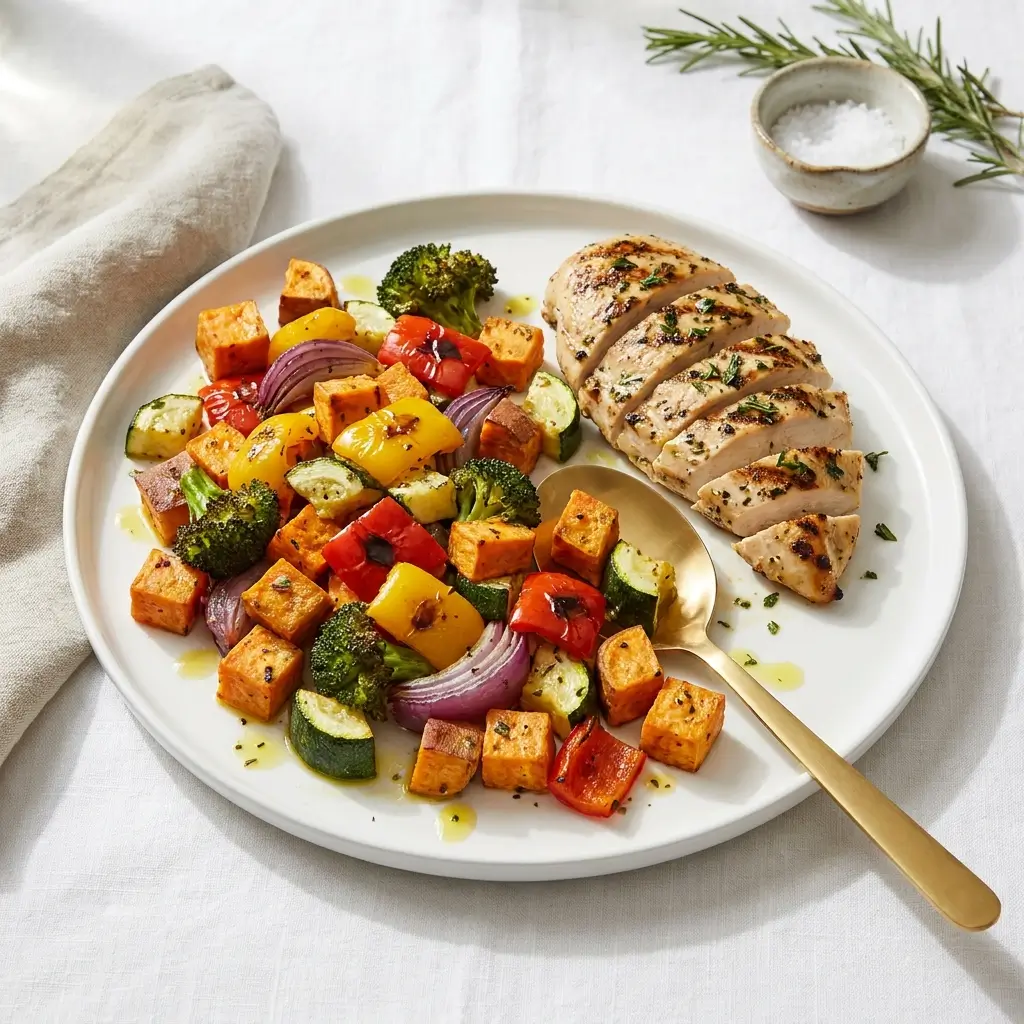
With the right roasting techniques, strategic vegetable sizing, and a bold balsamic-garlic seasoning, you’ll get vegetables with crispy golden edges, caramelized flavor, and perfectly tender centers every single time. The combination of olive oil, balsamic vinegar, garlic, and herbs creates a savory-sweet glaze that turns ordinary vegetables into a side dish people actually crave.
These balsamic roasted vegetables are versatile enough for weeknight dinners, healthy meal prep, or even a holiday table centerpiece.

II. The “Golden Rules” for Perfect Roasting
Rule 1: Strategic Sizing Matters
Not all vegetables cook at the same speed.
Dense root vegetables like potatoes, carrots, and sweet potatoes take longer to soften, while asparagus, bell peppers, and onions roast much faster.
The solution:
- Cut slow-cooking vegetables into smaller pieces
- Leave quick-cooking vegetables slightly larger
This keeps everything roasting evenly so you don’t end up with burnt asparagus and undercooked potatoes.
best amazon picks:
Recommended Sizes
- Baby potatoes: halved or quartered
- Carrots: thin diagonal slices
- Sweet potatoes: 1-inch cubes
- Brussels sprouts: halved
- Asparagus: trimmed into 2-inch pieces
- Bell peppers & onions: larger chunks
Rule 2: Never Crowd the Pan
This is the biggest mistake people make.
When vegetables overlap or sit too closely together, moisture gets trapped and the vegetables steam instead of roast.
For crispy vegetables:
- Use two baking sheets
- Spread vegetables in a single flat layer
- Leave small gaps between pieces
More airflow = better caramelization.
Rule 3: Don’t Waste the “Flavor Gold”
After tossing the vegetables in the balsamic seasoning mixture, there will still be oil, garlic, herbs, and vinegar left in the bowl.
Don’t leave it behind.
Use a spatula to scrape every last drop onto the baking sheets. Those concentrated seasonings become the deeply caramelized flavor bits that make roasted vegetables irresistible.
Rule 4: The 20-Minute Stir
Halfway through roasting, remove the trays and stir everything well.
Why it matters:
- Prevents edges from burning
- Promotes even browning
- Helps vegetables crisp on all sides
- Avoids undercooked centers
After stirring, re-spread the vegetables into a single layer before returning them to the oven.
III. Ingredients & Customization
The Master Vegetable List
This recipe works beautifully with a colorful combination of vegetables:
- 2 cups baby potatoes
- 2 cups carrots
- 2 cups sweet potatoes
- 2 cups Brussels sprouts
- 2 cups asparagus
- 1 bell pepper
- 1 red onion
The Balsamic Garlic Base
Core Seasoning Mixture
- 4 tablespoons olive oil
- 3 tablespoons balsamic vinegar
- 4 cloves minced garlic
- 1 teaspoon dried oregano
- 1 teaspoon dried parsley
- Salt and black pepper to taste
The balsamic vinegar caramelizes during roasting, creating rich sweetness and deep flavor.
Make It Your Own
Vegetable Swaps
You can easily customize the mix with:
- Parsnips
- Broccoli
- Cauliflower
- Butternut squash
- Zucchini
- Green beans
Oil Variations
Instead of olive oil, try:
- Avocado oil for higher heat roasting
- Coconut oil for subtle sweetness
Flavor Variations
Want a different twist?
- Add chili powder for heat
- Use smoked paprika for depth
- Add fresh rosemary or thyme
- Sprinkle red pepper flakes before roasting
IV. Step-by-Step Walkthrough
Step 1: Preheat the Oven
Preheat oven to 425°F (220°C).
Line two large baking sheets with parchment paper for easier cleanup and better browning.
Step 2: Prepare the Vegetables
Wash, peel (if needed), and chop vegetables into evenly sized pieces according to their cooking speed.
Pat vegetables dry before seasoning — moisture prevents crisping.
Step 3: Toss with Seasoning
In a large bowl:
- Combine olive oil, balsamic vinegar, garlic, oregano, parsley, salt, and pepper
- Add vegetables
- Toss thoroughly until evenly coated
Scrape remaining seasoning mixture onto the trays.

Step 4: Spread & Roast
Arrange vegetables across two baking sheets in a single layer.
Roast for:
- 20 minutes
- Stir and re-spread
- Roast another 20 minutes
Total roasting time: 40 minutes
Vegetables should be:
- Deep golden brown
- Crispy on the edges
- Tender inside
V. Serving & Pairing Suggestions
Finishing Touches
Serve immediately while hot and crisp.
Optional toppings:
- Fresh Parmesan cheese
- Chopped parsley
- Cracked black pepper
- Honey-balsamic drizzle
- Toasted pine nuts
Perfect Main Dish Pairings
These roasted vegetables pair beautifully with:
- Pork tenderloin
- Oven-baked chicken
- Grilled salmon
- Steak
- Roast turkey
They also work wonderfully alongside vegetarian grain bowls or pasta dishes.
Creative Leftover Ideas
Don’t let leftovers go to waste.
Try them in:
- Salads
- Quinoa bowls
- Wraps
- Breakfast omelets
- Frittatas
- Flatbreads
The roasted balsamic flavor becomes even deeper the next day.
VI. FAQ: Troubleshooting & Pro Tips
Why Are My Vegetables Soggy?
Usually because:
- The pan was overcrowded
- Vegetables were wet before roasting
- Oven temperature was too low
Use high heat and enough space between vegetables.
Can I Use Frozen Vegetables?
Yes — but selectively.
Best frozen options:
- Carrots
- Broccoli
- Brussels sprouts
Less ideal:
- Asparagus
- Zucchini
- Bell peppers
Frozen vegetables release extra moisture, so roast them at high heat and avoid overcrowding.
How Can I Make This More Holiday-Friendly?
For a festive version:
- Replace asparagus with broccoli
- Add butternut squash
- Use garlic-infused olive oil
- Finish with Parmesan and fresh rosemary
It becomes an easy holiday side dish that pairs with almost everything.
VII. Storage & “Like-New” Reheating
The 4-Day Rule
Store leftovers in an airtight container in the refrigerator for up to 4 days.
Allow vegetables to cool completely before storing to reduce condensation.
The Anti-Microwave Protocol
Microwaves make roasted vegetables soft and limp.
For best results:
- Preheat oven to 400°F
- Spread vegetables on a baking sheet
- Reheat for 8–10 minutes
This restores much of the original crispness and caramelization
Final Tip
Roasted vegetables are less about the recipe and more about the technique. Once you master spacing, sizing, and high-heat roasting, you can transform almost any vegetable into a crispy, caramelized side dish packed with flavor.
Leave a Comment & Rate this Recipe!
If you love this recipe, please consider giving it a star rating when you leave a comment. Star ratings help people discover my recipes online. Your support means a lot to me, I appreciate you.
There are no reviews yet. Be the first one to write one.