Moroccan Mint Tea Uncovered: A Complete Guide to Culture, Craft, and Ceremony
There are beverages, and then there are cultural institutions. Moroccan mint tea — known locally as atay — falls firmly into the second category. More than a simple drink, it is a living symbol of Moroccan identity, hospitality, and tradition that has been carefully passed down through generations. To be offered a glass of mint tea in Morocco is to be offered warmth, trust, and belonging. To decline it is considered, at best, unusual.
Table of Contents
The Cultural Heart of Morocco
Every great culture has its defining drink. The British have their Earl Grey, steeped precisely and served with milk. The Chinese have their delicate green teas, brewed with near-scientific attention to water temperature. Morocco has its mint tea — and it carries a weight that goes far beyond caffeine.
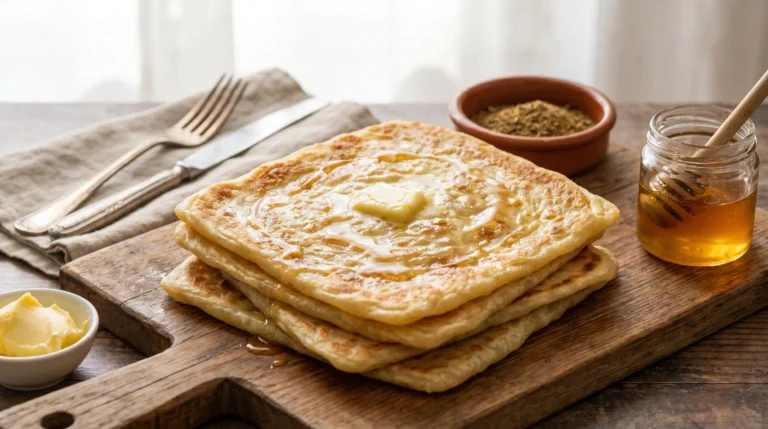
Where British tea culture is tied to the afternoon ritual, and Chinese tea to mindfulness and meditation, Moroccan mint tea is about connection. It is poured at business meetings, family gatherings, weddings, and quiet evenings alike. There is no wrong time for a glass. Locals call it “whisky Marocain” — Moroccan whisky — a playful nod to how seriously it is taken and how freely it flows. Breakfast, lunch, dinner, a midday break between souks — it suits them all, pairing equally well with a flaky msemen flatbread in the morning or a slow-cooked tagine in the evening.
Understanding Moroccan mint tea means understanding that it is never just tea. It is a gesture, a conversation starter, and a form of cultural pride all poured into a single ornate glass.
Essential Components and Equipment
Getting Moroccan mint tea right begins long before the kettle boils. The ingredients and tools you choose are the foundation of an authentic result.
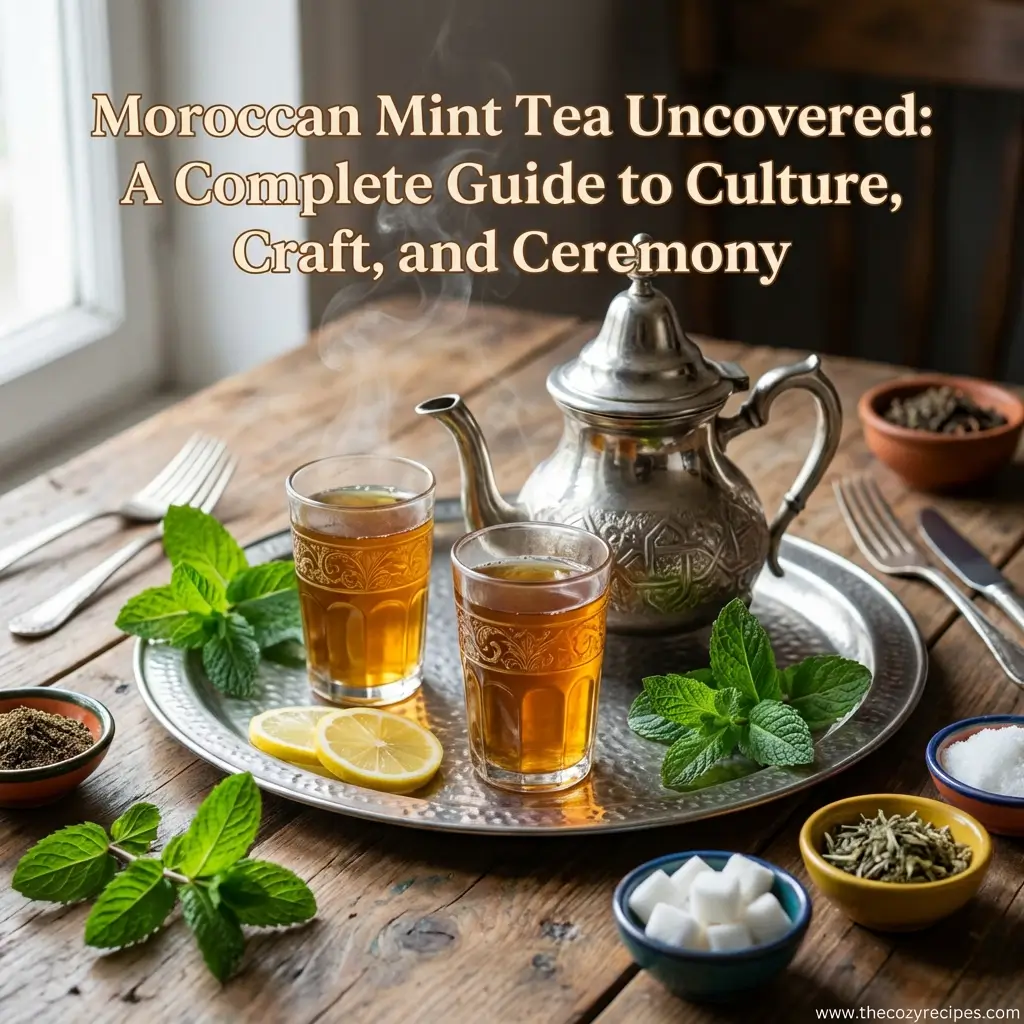
Gunpowder Tea is non-negotiable. These tightly rolled pellets of Chinese green tea — named for their resemblance to old-fashioned gunpowder granules — are the backbone of the drink. When heat and water meet them, they slowly unfurl, releasing a bold, slightly smoky flavor that forms the base of everything that follows. You will not achieve the same depth with standard green tea bags. Seek out proper gunpowder tea, ideally from a Middle Eastern grocery shop, which tends to stock quality loose-leaf varieties at accessible prices.
Fresh Mint brings the soul. Both spearmint and peppermint work beautifully, though spearmint is the more traditional choice in Moroccan households. Do not substitute dried mint — the freshness of the herb is what gives the tea its bright, cooling character.
Caster Sugar provides the characteristic sweetness. Moroccan mint tea is traditionally quite sweet, sometimes strikingly so by Western standards. However, this is entirely adjustable to your personal preference. The sugar is added during cooking, not after, which allows it to fully dissolve and integrate into the flavor rather than sitting at the bottom of the glass.
The Right Vessel matters more than people expect. You will need a Moroccan teapot or a stovetop-safe kettle — one that can sit directly over heat. This is not optional. A significant part of what makes this tea distinctive is the slow stovetop simmer that allows all the ingredients to truly meld together. A standard decorative teapot that cannot handle direct heat will not serve you here.
| Ingredient | Amount |
|---|---|
| Fresh mint sprigs (halved) | 7 sprigs + extra for garnish |
| Loose gunpowder tea | 1 heaped teaspoon |
| Boiling water | 500ml |
| Caster sugar | 3 tablespoons |
The Traditional “Double-Rinse” Method
The technique behind Moroccan mint tea is what elevates it from a simple brew into something more deliberate. The traditional double-rinse method is used in households across Morocco, and once you understand the logic behind each step, you will never want to skip any of them.
Step One: Capturing the Essence. Begin by placing your gunpowder tea in the teapot and adding a small amount of boiling water — just enough to partially cover the leaves. Place the pot over low heat and allow it to simmer gently for a minute or two. This short, concentrated brew extracts the primary flavor of the tea: its boldness, its depth, its slight smokiness. This liquid is precious. Set it aside carefully in a small cup or bowl. It will return later.
Step Two: The Cleaning Rinse. Now add a second small amount of hot water to the same leaves still in the pot. Swirl it around briefly and then discard this water. This step washes away any dust, residue, or bitterness that may cling to the outside of the leaves. It is a quick step, but it matters for clarity of flavor and cleanliness of the final cup.
Step Three: The Slow Simmer. Return the reserved essence to the pot. Add your fresh mint sprigs, caster sugar, and top up with water. Return the pot to medium-low heat and allow everything to simmer slowly together. This is where patience pays off. The gunpowder tea needs time to continue expanding and releasing flavor, and the fresh mint needs gentle, sustained heat to truly infuse the liquid rather than simply floating through it.
Serving and Customization
Once your tea is ready, stir it well before pouring to ensure the sugar is fully dissolved and the flavors are evenly distributed. If your teapot does not have a built-in strainer, hold a small mesh strainer over each glass as you pour to catch any loose leaves.
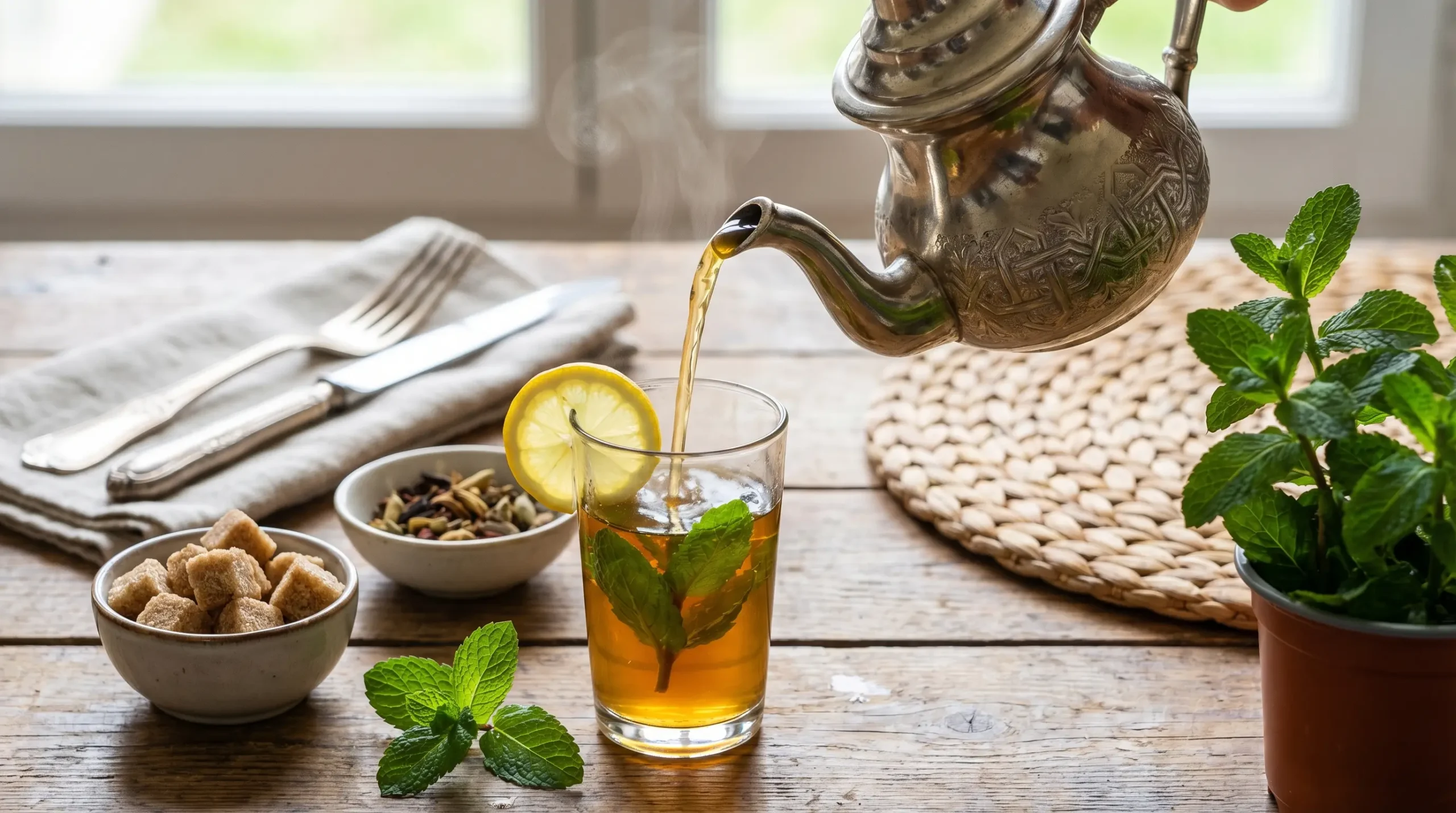
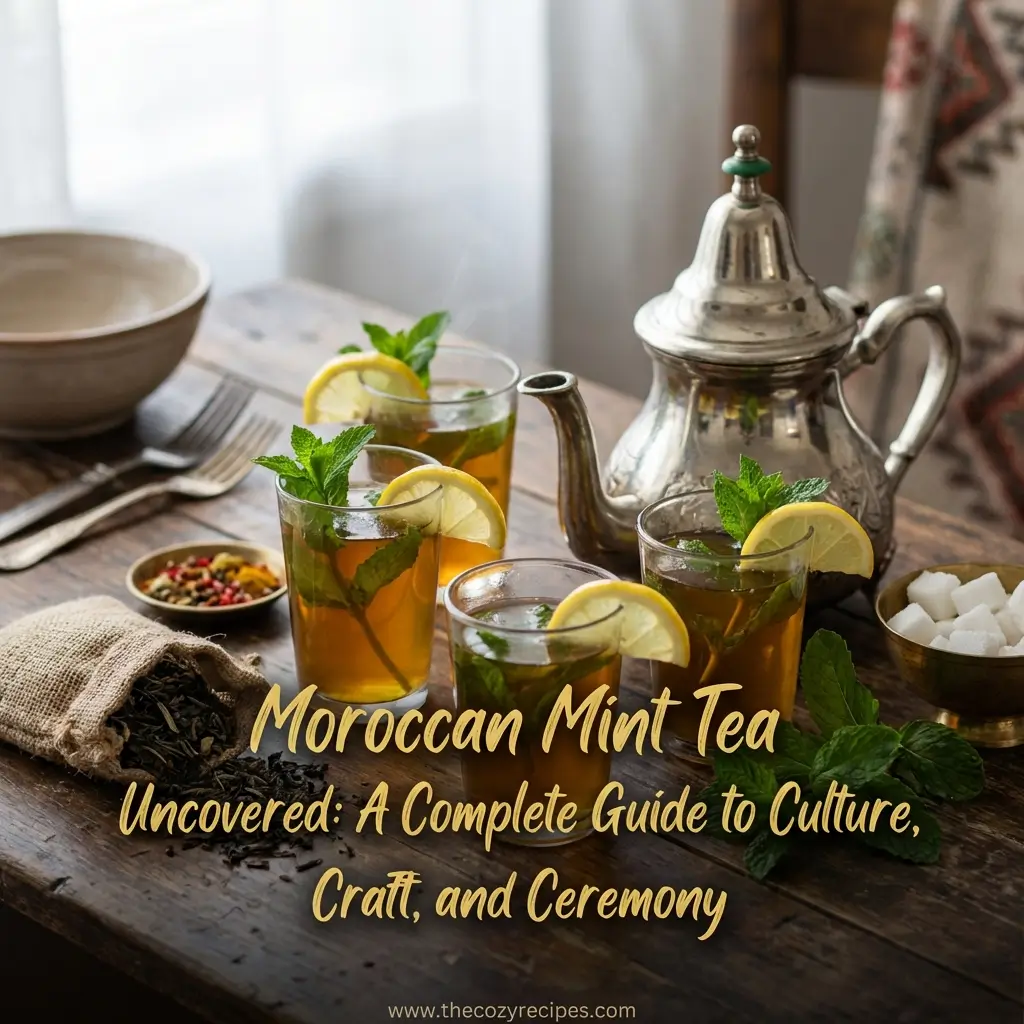
For a stronger aromatic experience, tuck a small sprig of fresh mint directly into each glass before pouring. It enhances the fragrance with every sip and adds a beautiful visual touch.
Beyond mint, Moroccan tea welcomes herbal experimentation. Verbena adds a citrusy brightness. Geranium brings a subtly floral, rose-like note. Many households blend two or three aromatics together, creating a signature blend that becomes their own.
Expert Tips and Sourcing
Gunpowder tea is your most specific ingredient. Middle Eastern grocery shops are your best bet, as they typically carry loose-leaf varieties that supermarkets simply do not stock.
For the authentic teapot experience, Moroccan souks — particularly in Marrakech or Fes — are unmatched. The craftsmanship of traditional Moroccan teapots, often silver or stainless steel with ornate engravings, is part of the whole experience.
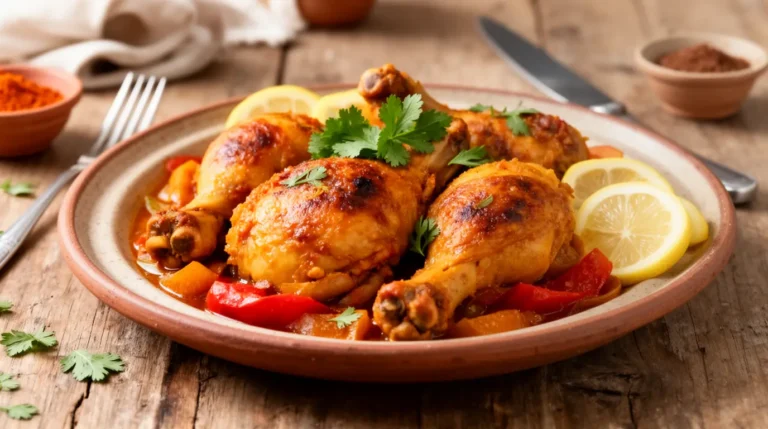
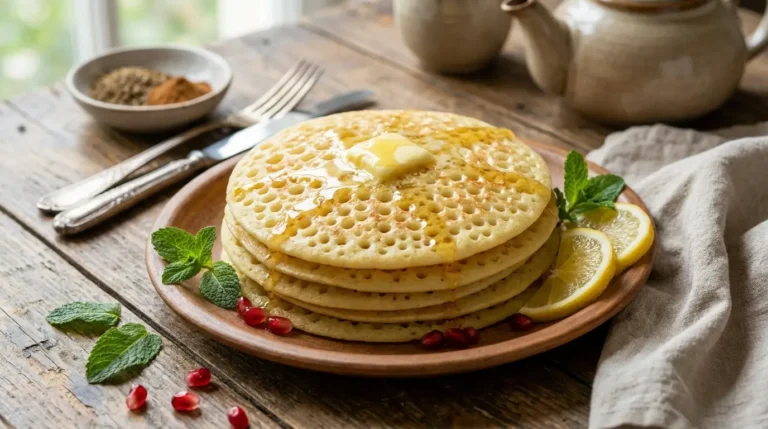
When it comes to food pairings, mint tea belongs alongside Moroccan classics: the smoky, roasted aubergine of Zaalouk, the slow-spiced richness of a Tagine, or the delicate honeycomb sweetness of Baghrir pancakes. These combinations are not accidents — they have been refined over centuries of shared tables.
Moroccan mint tea is not simply a recipe. It is a practice. And once you have made it properly, you will understand exactly why Morocco pours it at every opportunity.
If you love this recipe, please consider giving it a star rating when you leave a comment. Star ratings help people discover my recipes online. Your support means a lot to me, I appreciate you.
No Title
Excellent!!!